

Tinto Talks #101 | Fate of the Pheonix - Religions of the Empire
Date: 2026-03-25 15:09:47
Hello, and welcome back to another Tinto Talks, where we are currently looking at the additional features for the 1.2 ‘Echinades’ patch, and the Fate of the Phoenix immersion pack that will release alongside it.
As mentioned last week, the primary pillars of Fate of the Phoenix are the day-to-day running of the state and the mid-term goals of reconquering the near empire. These pillars tie heavily into the interactions we have incorporated into religion for the DLC.
Orthodoxy
Orthodoxy is of course the central religion in Fate of the Phoenix, being tied so inextricably to the Roman state. The basic system of Orthodoxy still operates within the confines of the Patriarchates, both Ecumenical and Autocephalous.
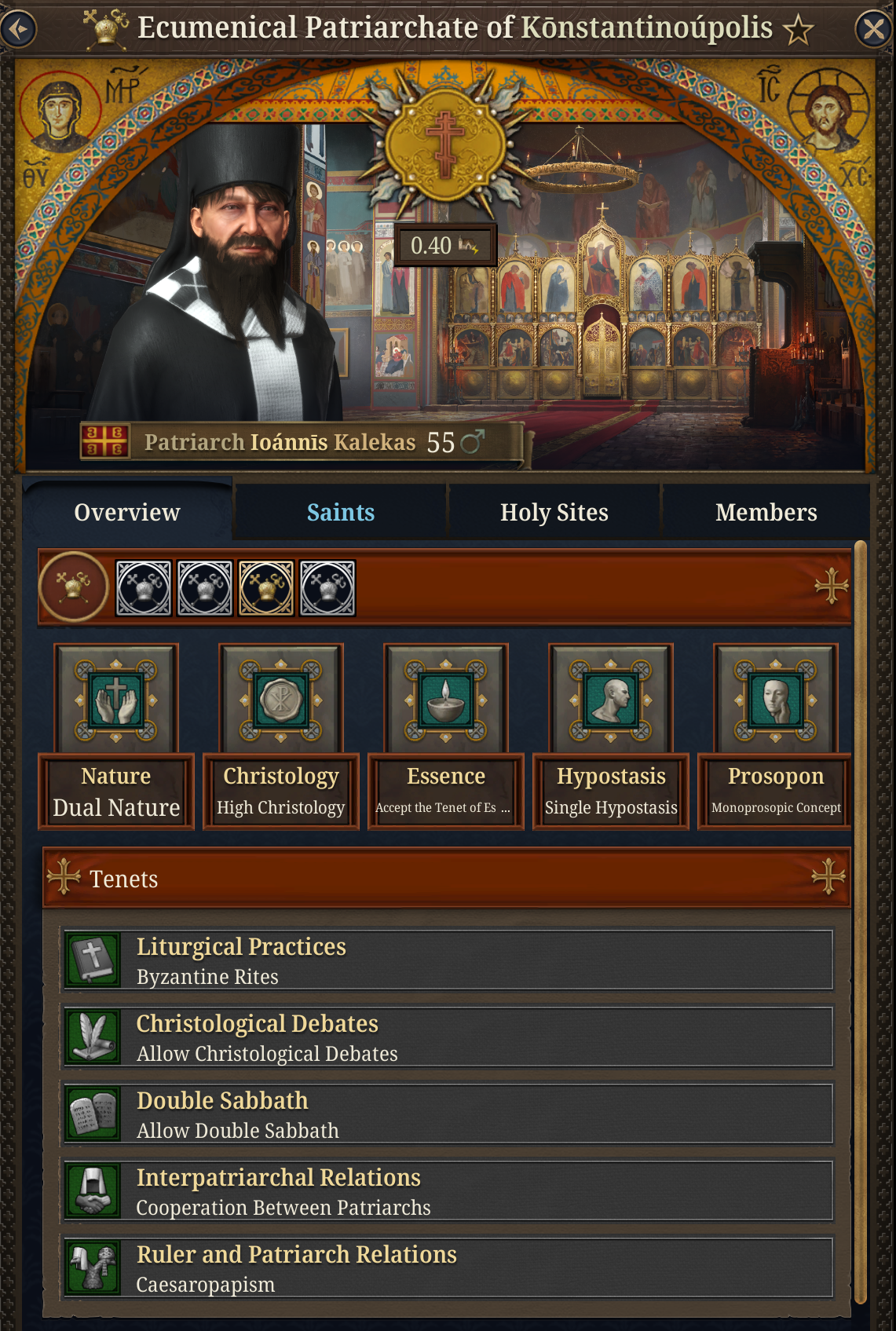
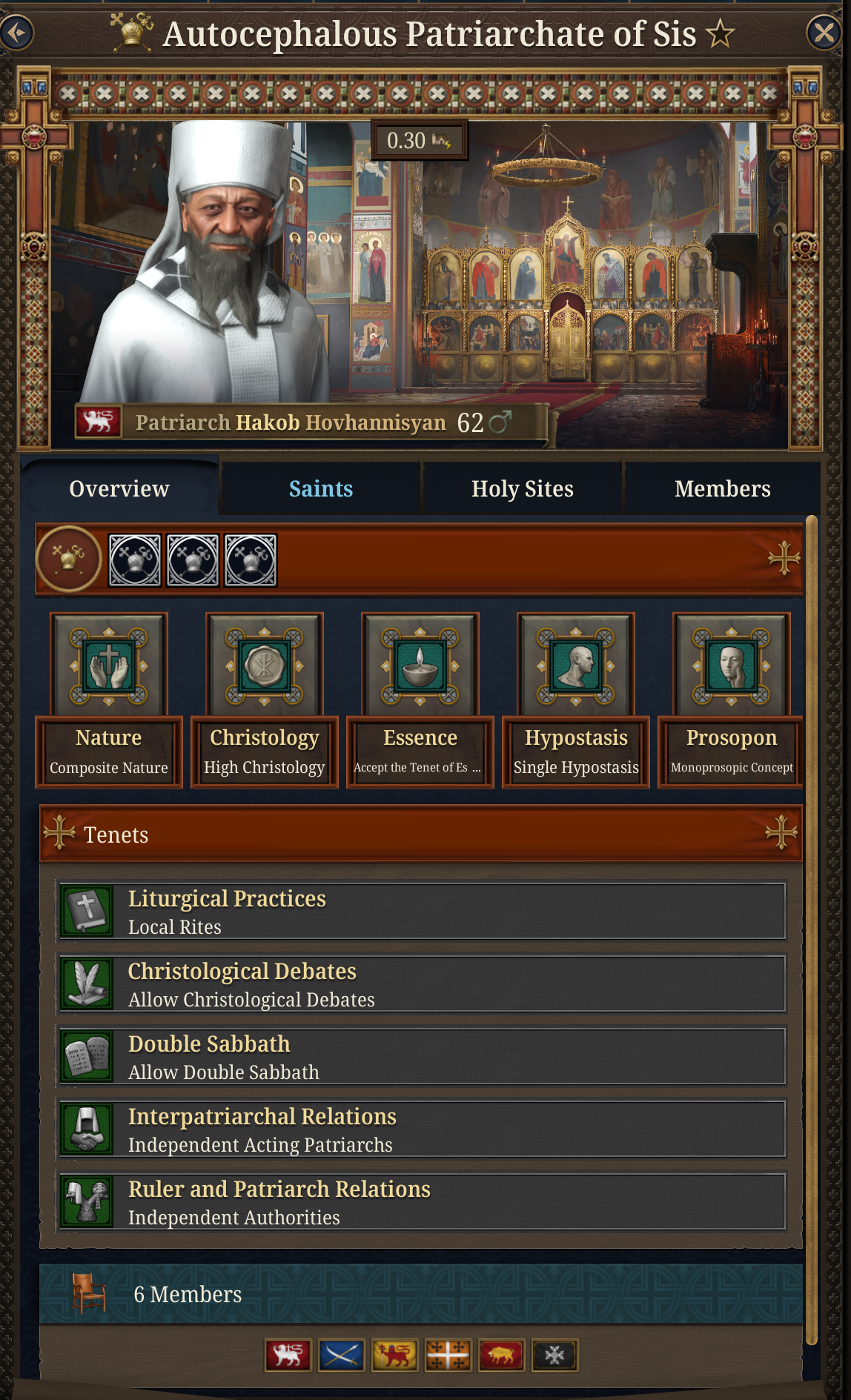
Patriarchs are now characters in their own right, who appear at the head of the patriarchates instead of the ruler.
Some Patriarchal Laws are so sacred that they cannot ever be changed; their permanence is now shown visually in the GUI.
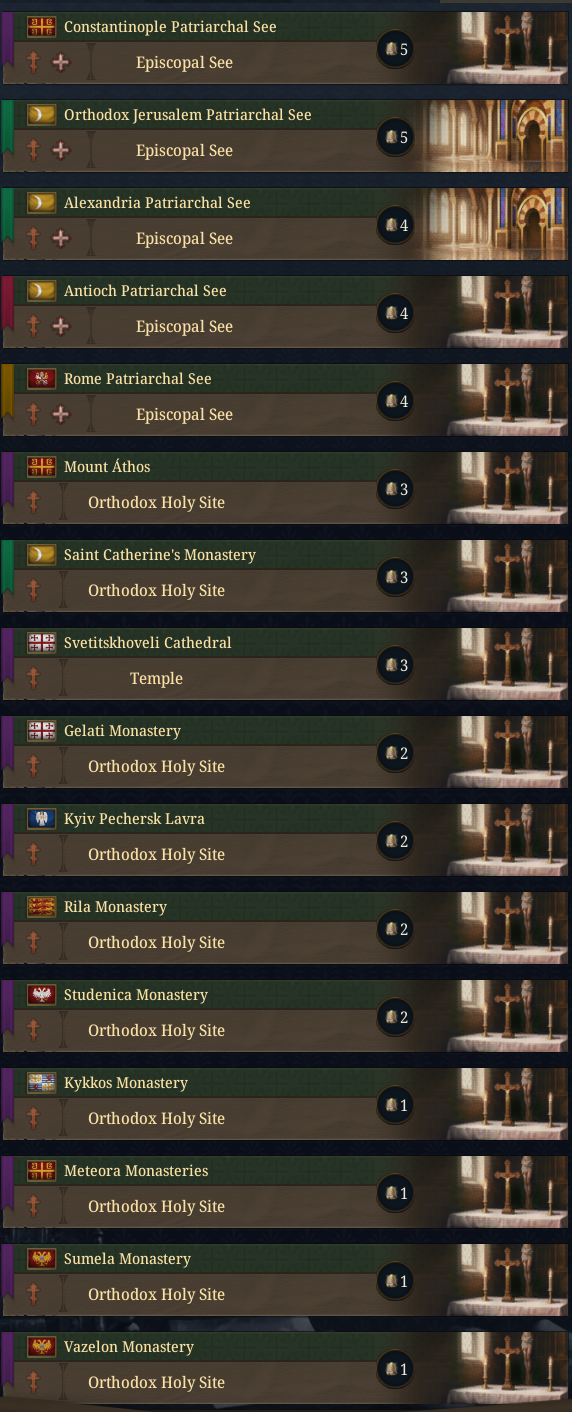
We have also added several more Holy Sites for the religion, including monasteries like Mount Athos and the Kyiv Pechersk Lavra, as well as Svetitskhoveli Cathedral.
Greek Orthodox countries now use the Koiné dialect (pronounced like KEE-nee) as their Liturgical Language instead of common Greek.
Actions
All Eastern Christian religions no longer use Rite Power, instead they have changed to the generic Religious Influence system.
As the proud owner of a Patriarchal seat, you can spend some Religious Influence, and of course cash, to have your children to be educated by the Patriarch himself, which is the finest education in the game in terms of ability development. It also converts them to Orthodoxy on the off-chance they were a bit too wayward.

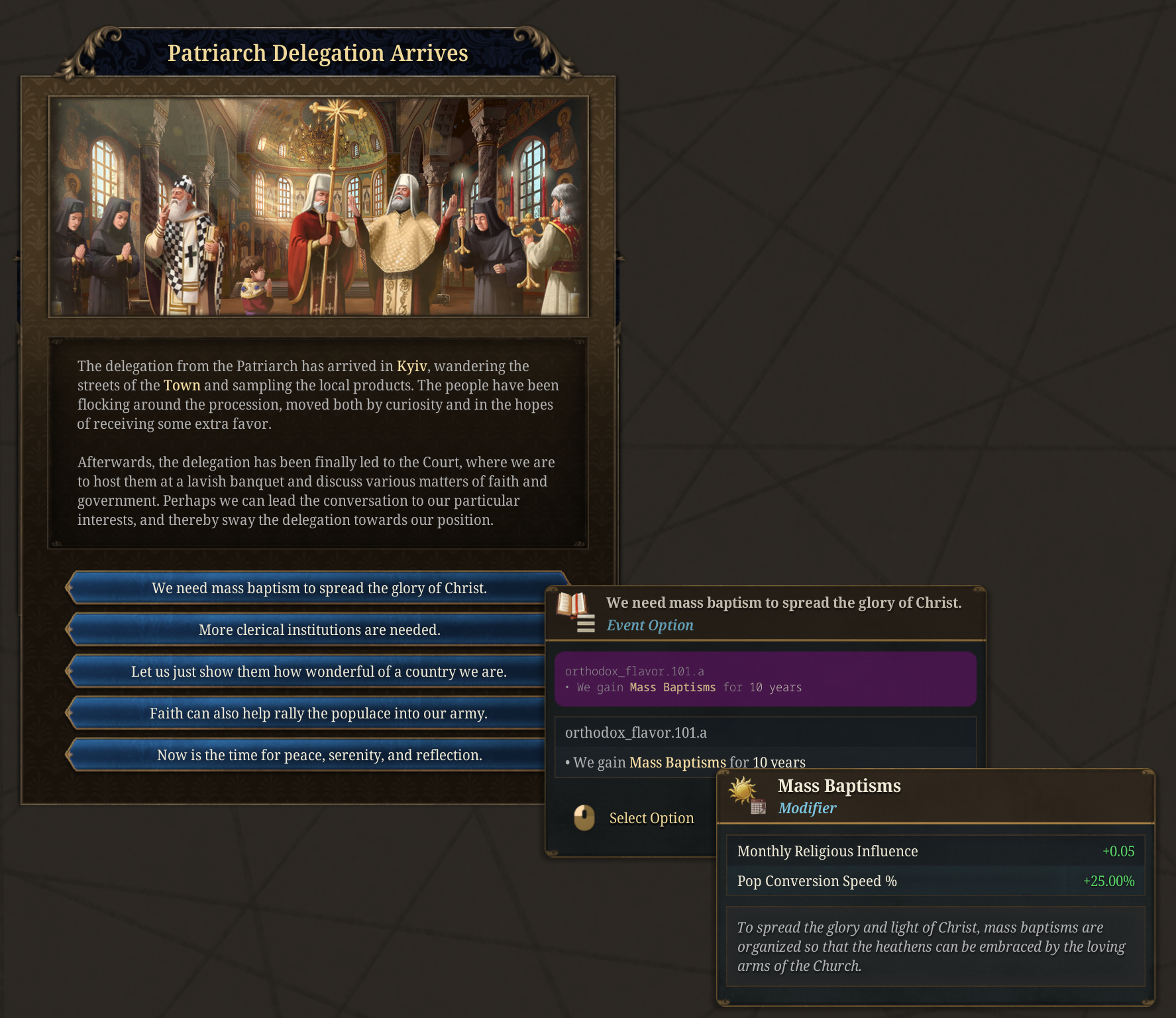
If you don’t happen to own an Autocephalous Patriarchate, you can invite a delegation from the Patriarchate that you belong to at the cost of influence, which improves mutual opinion with the Patriarch’s country and allows you to select a bonus of your choice.
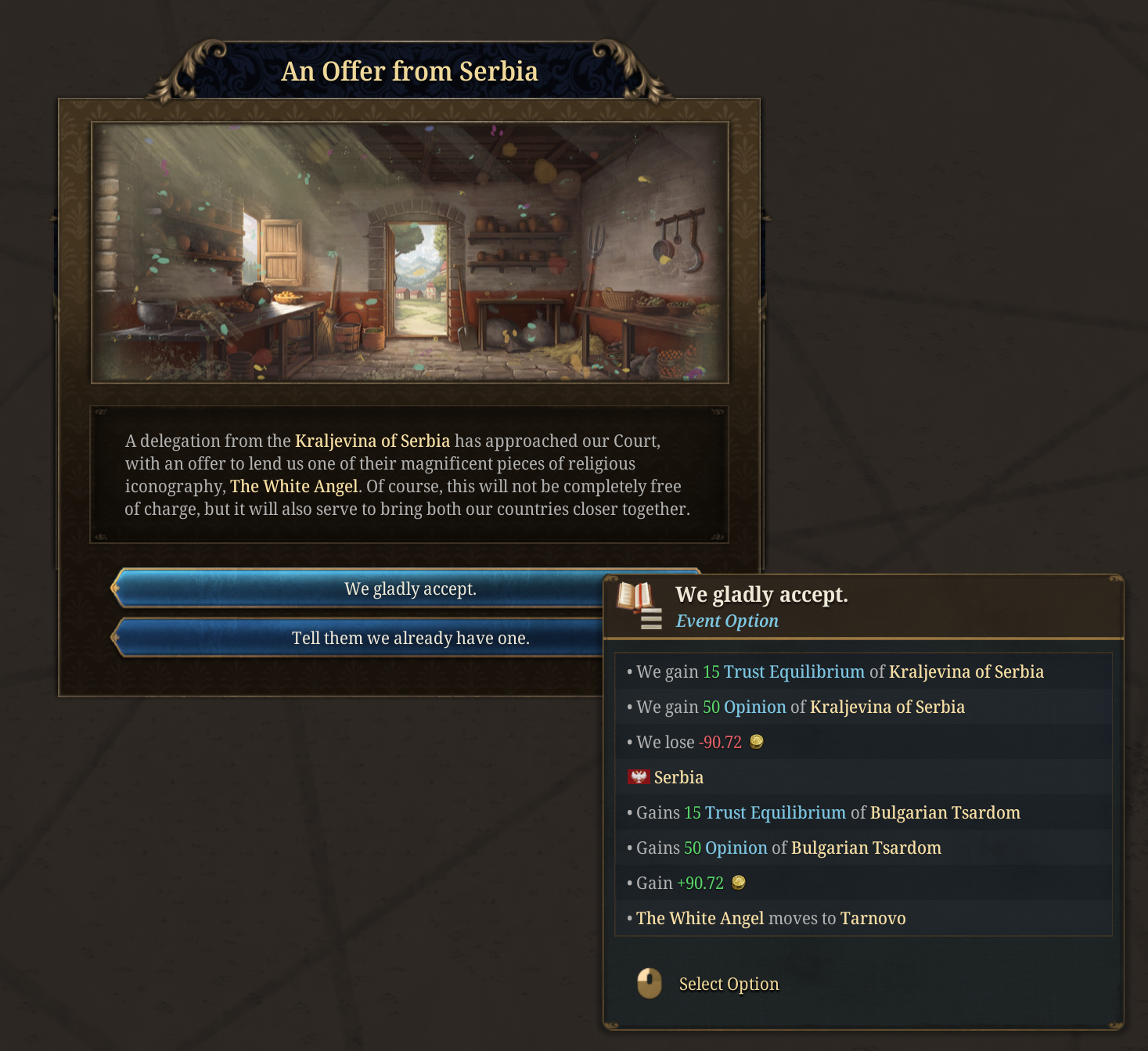
Owners of Icon works of art can lend them to other Orthodox countries to earn a bit of cold, hard cash relative to the quality of the work of art. It warms relations between both countries, and the recipient country gets to benefit from the Icon for 10 years.
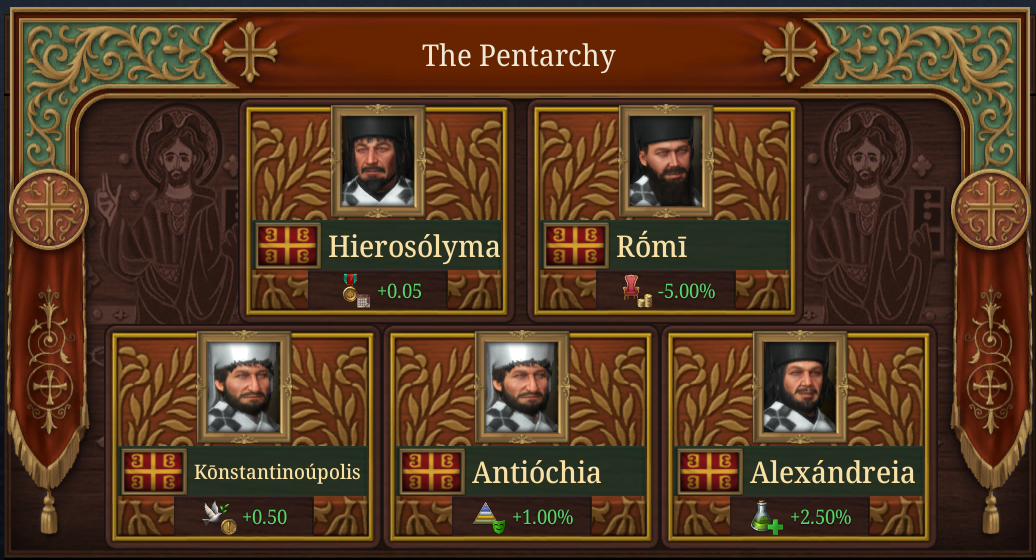
With Fate of the Phoenix, we introduce a new feature called the Pentarchy. It represents the 5 most important patriarchates in the world, 5 permanent pillars that anchor Christianity, and were formalised into the Pentarchy by Justinian I. The ancient apostolic sees of Constantinople, Rome, Jerusalem, Antioch, and Alexandria need no introduction: they have their roots in the ancient world and still exist today.
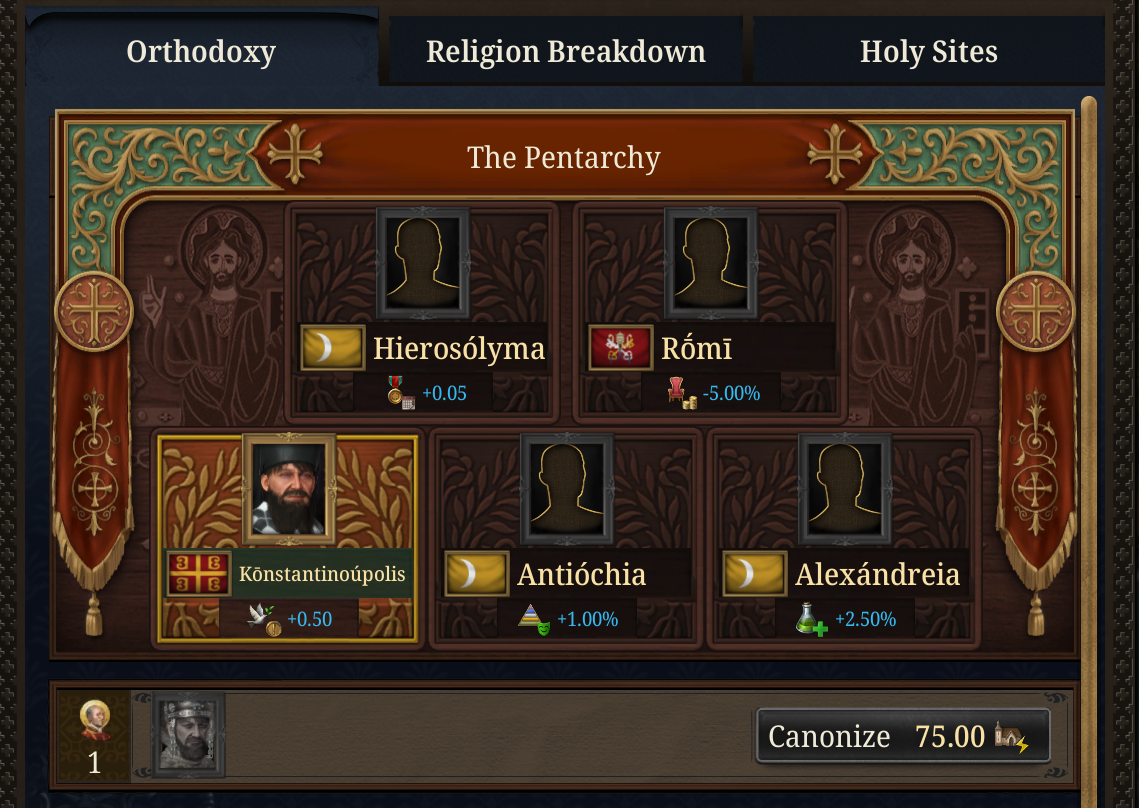
Uniting the Pentarchy should be a main long term goal of any Orthodox empire. Holding each member of the pentarchy grants you a unique bonus, and uniting all of the pentarchy under your control will increase all of their bonuses.
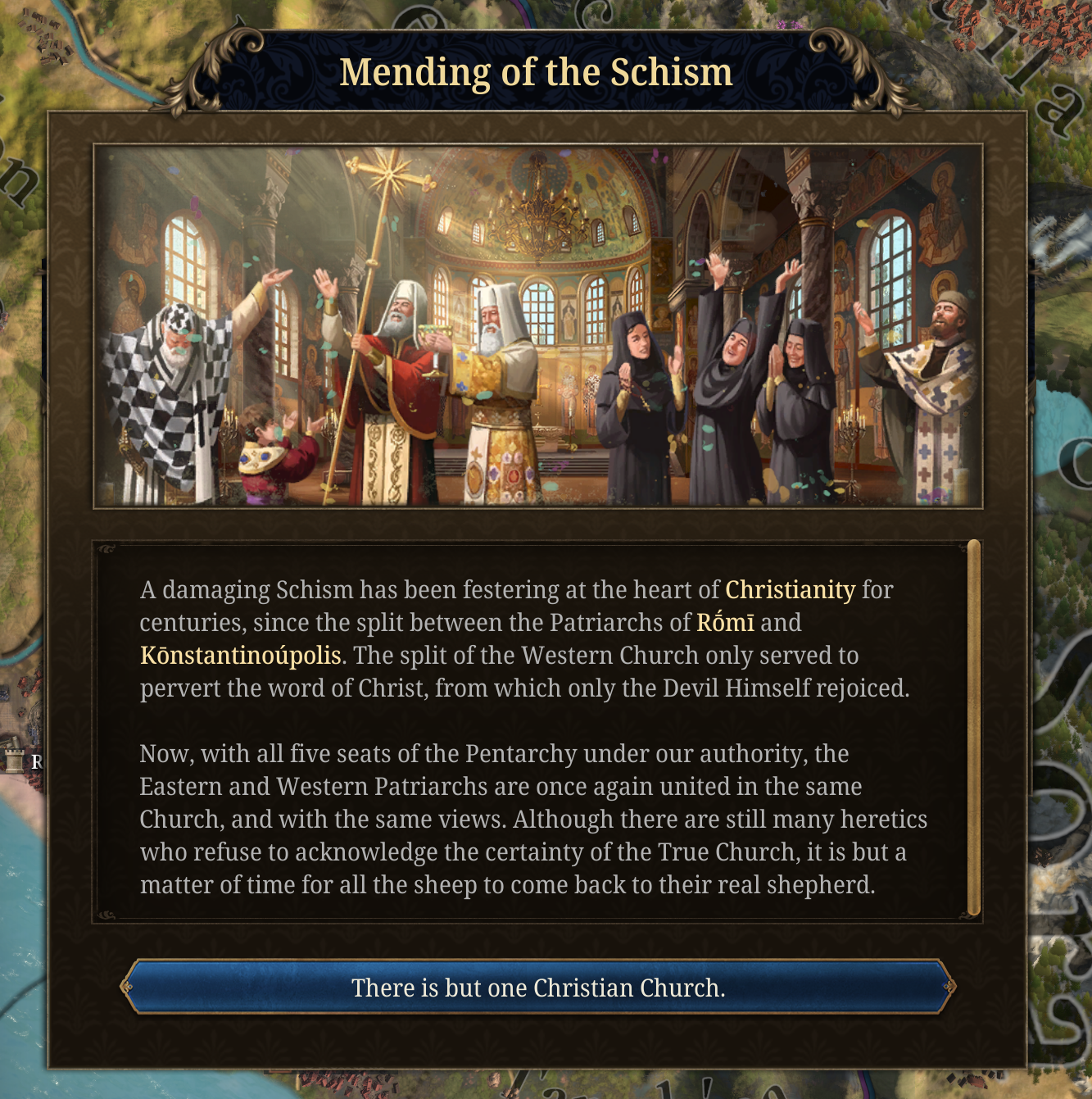
Uniting the Pentarchy will also give you the option of finally mending the Western schism with Catholicism… at least in theory. Unilaterally declaring the Western Schism over will bring you a significant boost to your heretic conversion speed. Some Catholic pops in the West will convert to Orthodoxy, and some friendly Catholic countries might flip too.
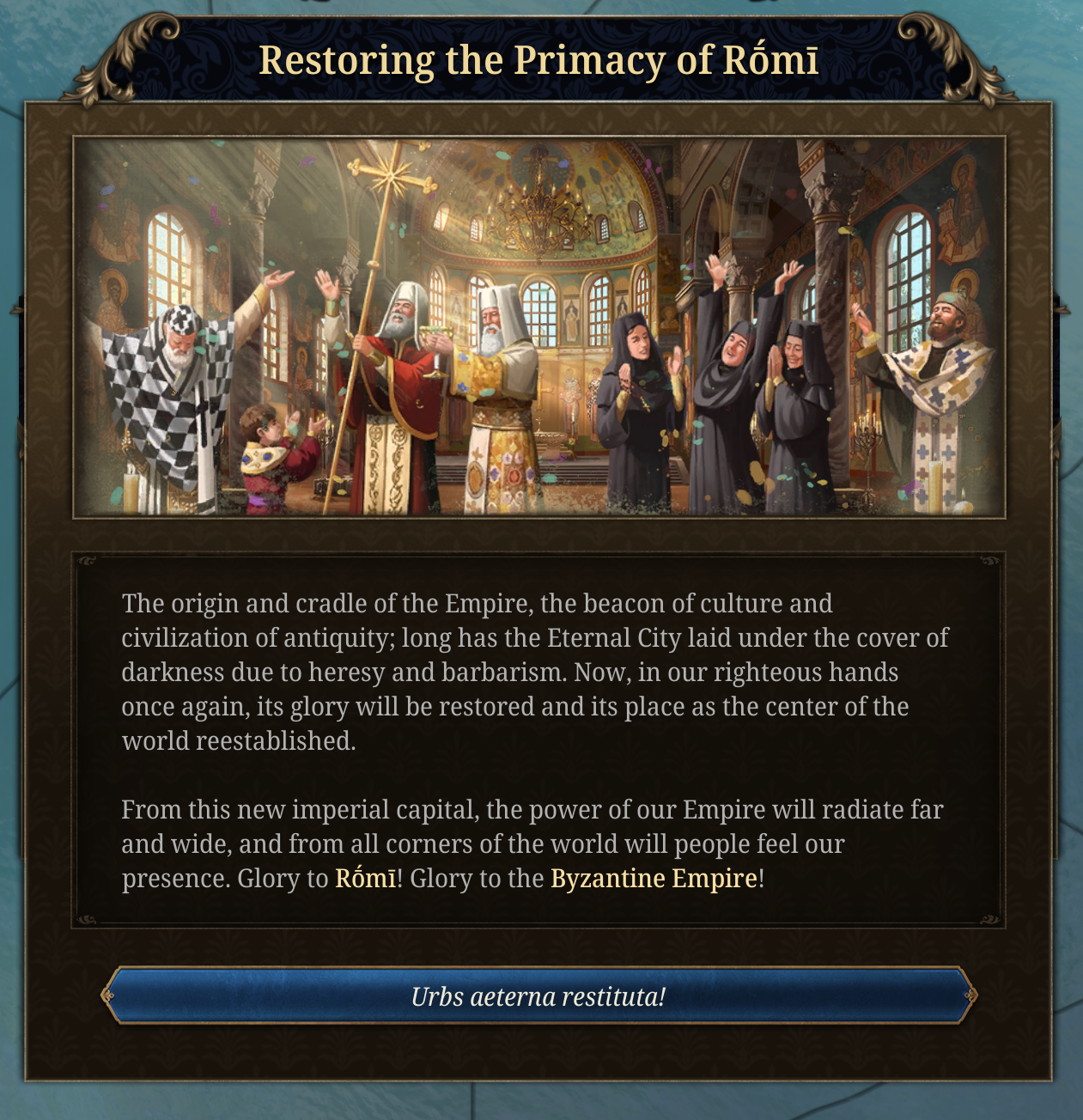
Once you do that, you can also choose to restore the primacy of Rome, which will relocate your Autocephalous Patriarchate to St Peter’s Basilica in Rome itself, a very prestigious move. Doing so will severely damage the authority of the exiled Catholic Pope, degrading the Catholic Church’s Papal Authority law to Invisible Church, meaning they no longer receive tithes.
Extras
Owners of the DLC will also see lots of art, like immersive event illustrations and 3D character portraits for patriarchs and regular clergymen.
Miasiphysitism has also benefited from some additional rework by virtue of sharing a lot of systems with Orthodoxy, but we have also added some additional features to separate them a little, such as Religious Aspects.
Hellenism
Since an easter egg resurgence of Hellenism was in the base game, we felt it was worthwhile expanding on it just a little.
Gemistos Plethon was a real figure from 15th century Byzantium who wrote about Platonism, a philosophical system harking back to Plato’s Ancient Greece that could be considered somewhat syncretic between Christianity and Hellenistic paganism.
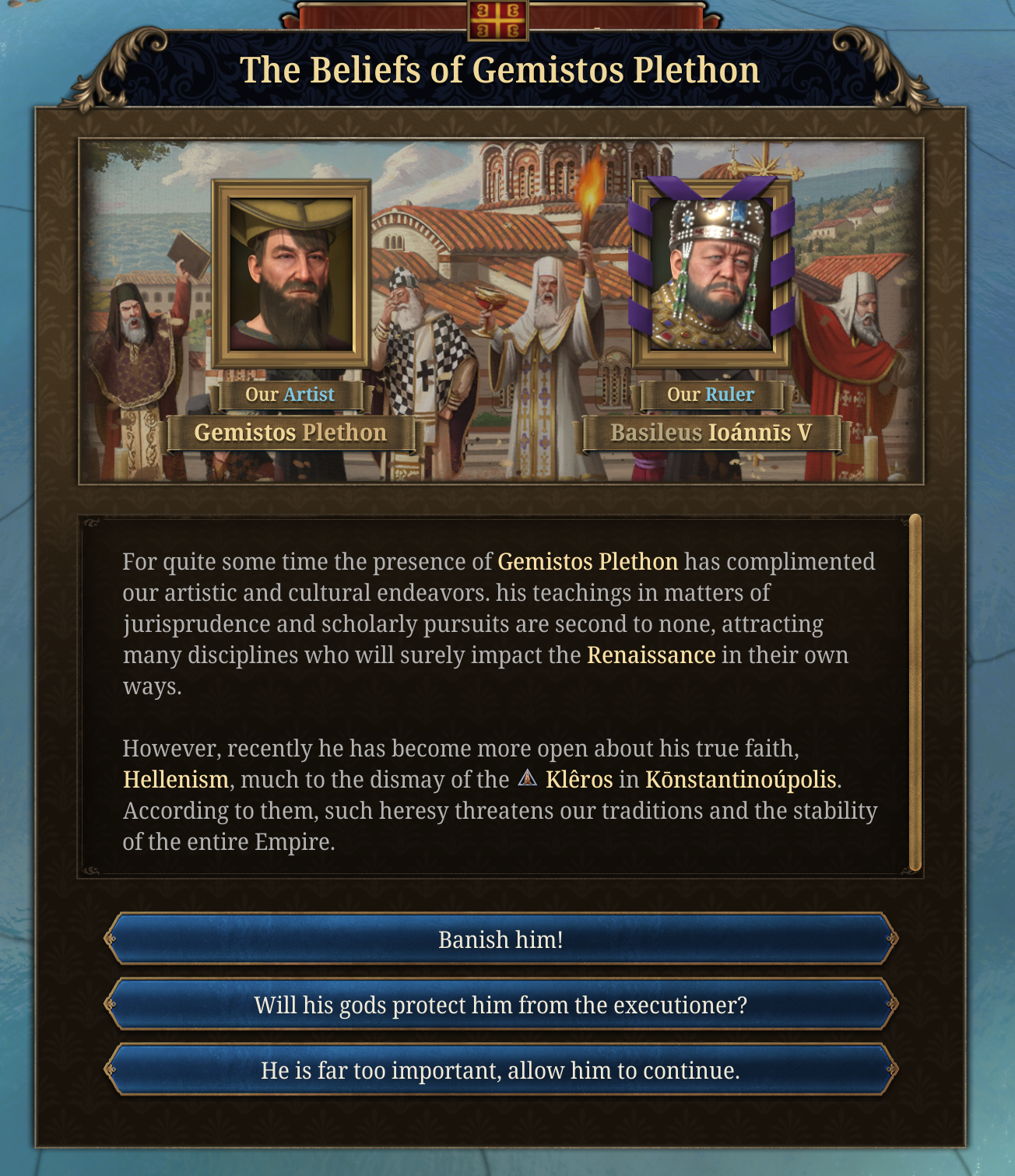
He preached that the Hellenistic understanding of God was compatible with the Christian understanding, and that the ancient Greek pantheon should form the basis of the Byzantine state religion. Although he frequently danced close to being branded as a heretic, he retained good connections in the Byzantine court.
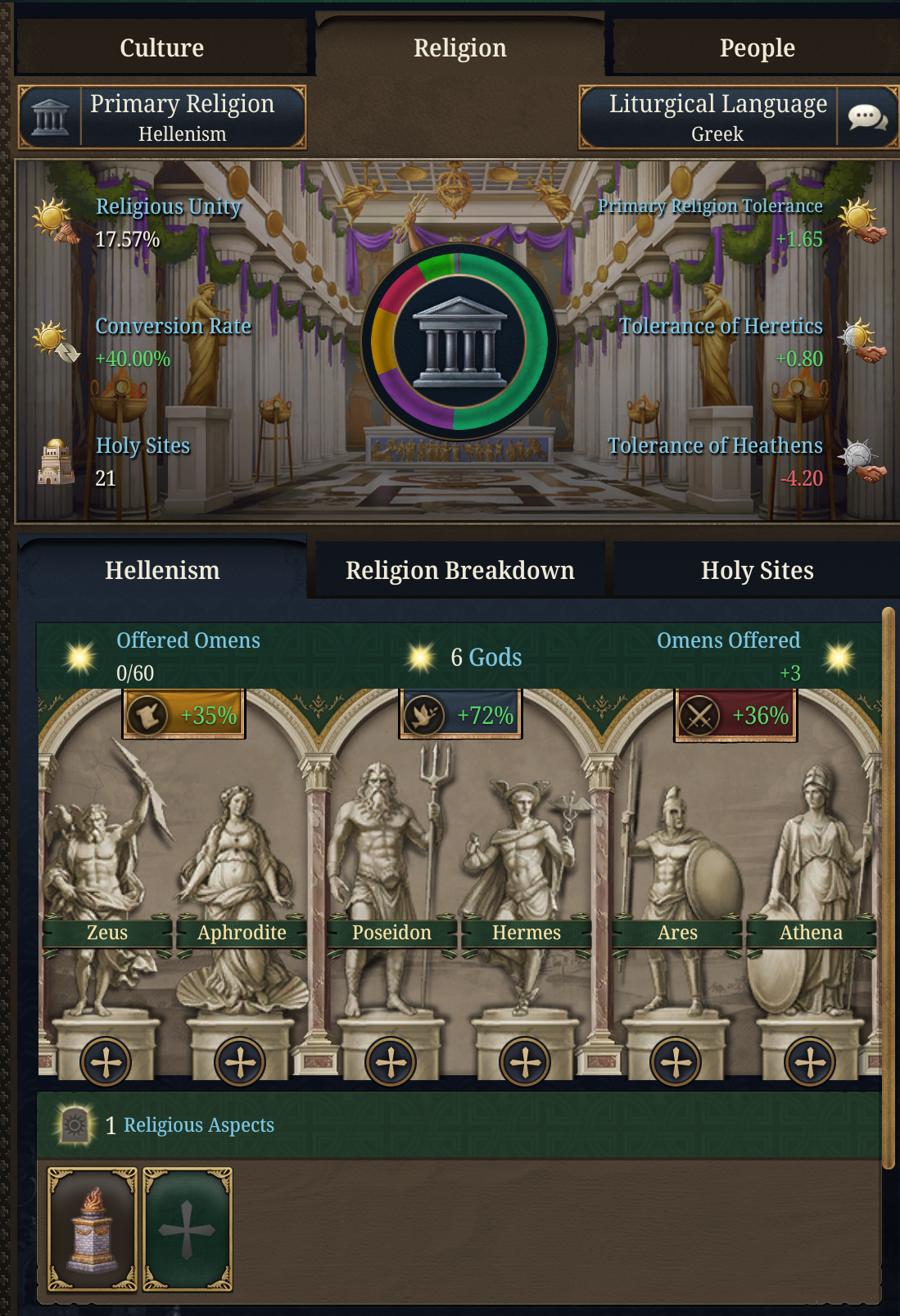
As such, Hellenism at its outset will feel more like a heresy of Christianity than true paganism. This is reflected in the Monism religious aspect that they will begin with, the belief that The One is God, and all Gods are the One, which somewhat reduced the impact of the individual Gods while giving you stability.
If you hold all the Holy Sites for Hellenistic religion, you can also declare a return to the old ways without having to wait for Plethon to appear. This kind of player-driven heresy is something we want to look at for other religions like Anglicanism eventually.
Gods
The gameplay loop of Hellenism is a little unique. Historically, praying to individual gods was considered a ruler’s civic duty. Roughly every 10 to 20 years, players will be able to perform a ritual to one of 6 gods.
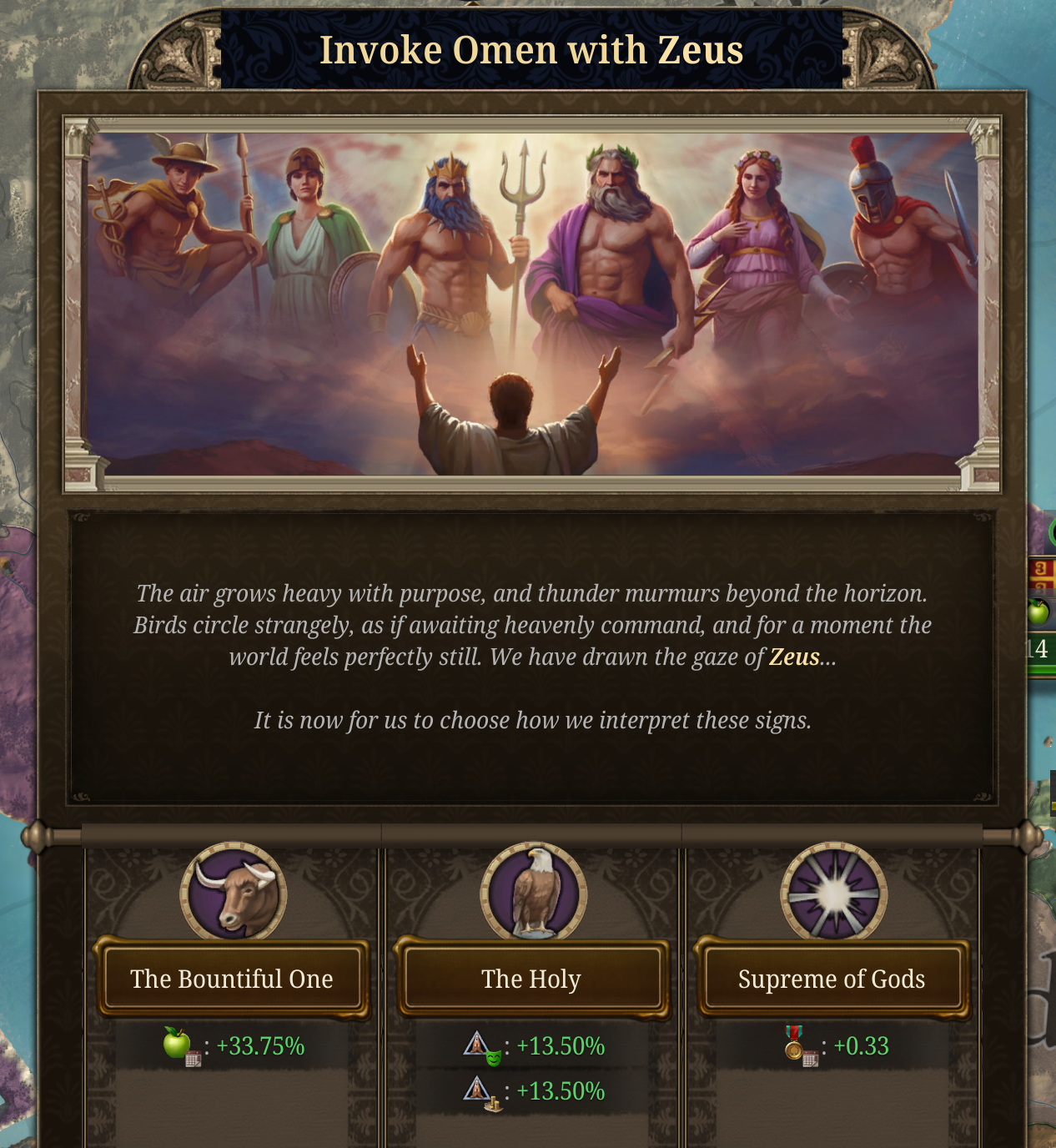
Each god has 10 unique Omens up their sleeve, and upon paying your Religious Influence they will give you a small random selection to choose from. Once you select that omen, it stays active for 10 years.
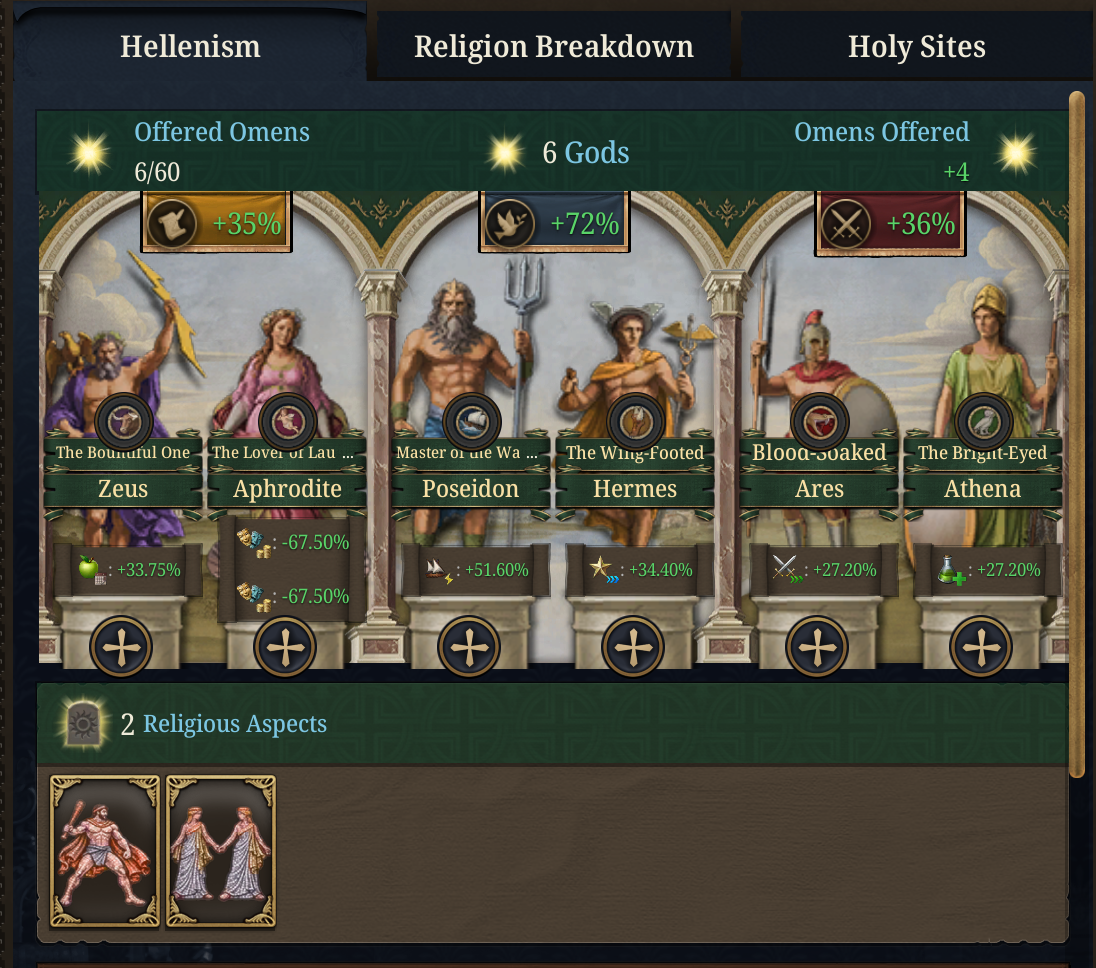
Omens are expensive but very powerful modifiers, and as the ritual is so closely tied to the ruler, the power of each Omen will increase depending on your Ruler’s ADM, DIP, or MIL ability, depending on the category of the God..
They get a small selection of different religious aspects that for example allow the canonization of God Emperors or improving the power of Omens.
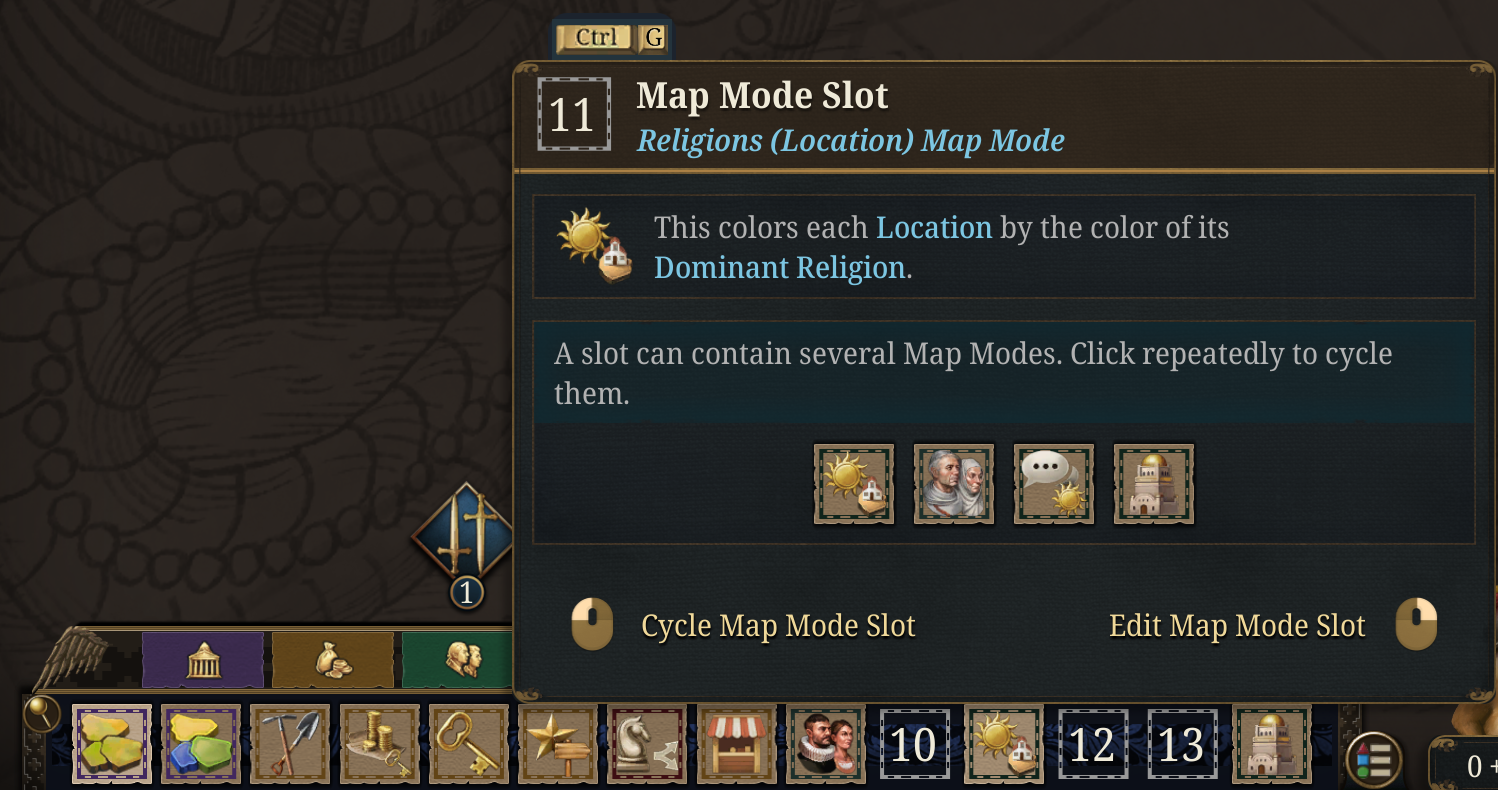
Here's a sneak peek of one of the several QOL features that we have been working on. While playing with the religious features of Fate of the Phoenix I found it pretty handy to assign all my religious mapmodes to a single slot so I could cycle through them all easily.
Next week is Easter, so a lot of the team will be off. But not me. I’ll be bringing you another Tinto Talks that takes a deeper look at the general flavour for Byzantium that is spread throughout the game.